« BACK TO BLOG
Market Intel, Forecasts & Strategies
Slow, Steady, and Turning Up: What CREDA’s 2026 Data Says About Industrial, Office, and Power
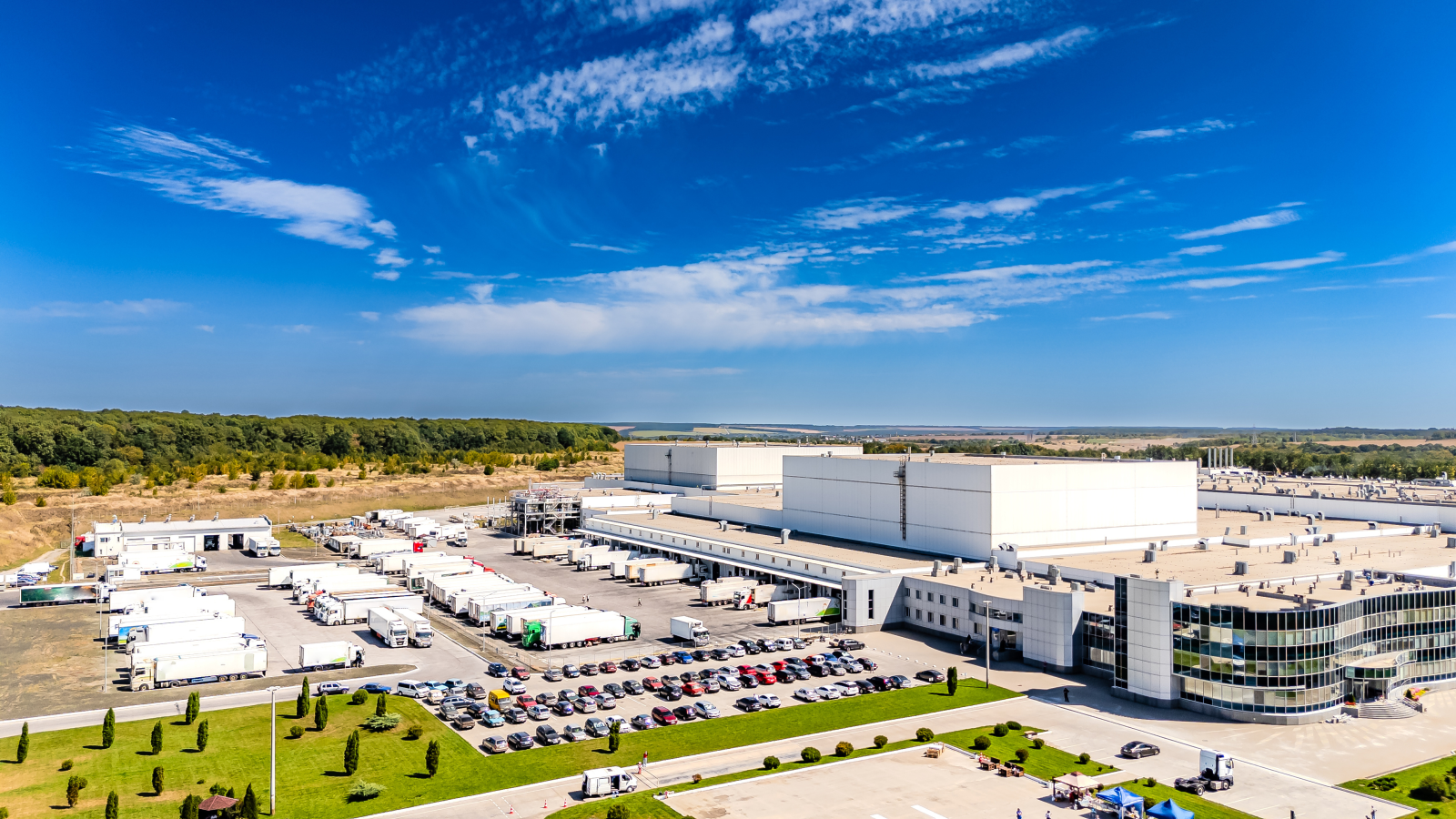
It was not that long ago that industrial was the boring cousin to the office tower, and the trade group that spoke for developers was known by four letters most people outside the industry could not decode. Both of those things changed this year. Industrial has spent five years as the most sought-after asset class in commercial real estate, and in mid-2026 the association known for decades as NAIOP became the Commercial Real Estate Development Association, or CREDA.
To assess where the development side of the market actually stands, I sat down with Marc Selvitelli, CAE, President and CEO of CREDA, on America’s Commercial Real Estate Show. CREDA now represents more than 22,000 members across the United States and Canada, and its research desk publishes two of the reports I watch most closely: the sentiment survey and the industrial demand forecast. Both just came out, and together they tell a measured story worth understanding whether you own, invest, lend, or develop.
The short version: the market is normalizing, capital is coming back, and the biggest brake on new supply is no longer the one everyone talks about.
The Rebrand: A Name That Finally Fits the Membership
The name change was years in the making, built on member surveys, interviews, and focus groups, and Marc reports it landed better than the organization expected. The logic is simple. NAIOP started life speaking for industrial and office parks, but over the past decade its membership has grown to cover nearly every asset class in commercial real estate: multifamily, mixed use, medical office, life sciences, senior housing, and the latest darling, industrial outdoor storage. A name that says Commercial Real Estate Development Association tells a policymaker or a prospective member exactly who is at the table.
For those of us who send members and reference the research, the substance matters more than the letters. The reports are the same quality they have always been, and most of them are free to the public.
The Industrial Forecast: A Return to Normal, Not the Rocket Ship
Coming out of the pandemic, industrial development boomed, and the market got a little overbuilt. The correction shows up plainly in the new demand forecast, and so does the recovery.
- Deliveries at an Eight-Year Low: Only 75 million square feet of new industrial space delivered in the first half of 2026, the lowest first-half total in eight years. That is the lagging echo of the development slowdown, not a demand problem.
- Construction Is Turning Back Up: Space under construction rose 5% year over year to 595 million square feet. Marc expects that pace to continue, which points to a noticeable increase in both demand and production ahead.
- Fundamentals Still Support It: Vacancy ticked only slightly, from 6.8% to 6.9%. Consumers are still spending and e-commerce demand is intact, so as long as interest rates hold, the trend looks healthy. This is a return to historical norms rather than the rocket ship of six or seven years ago.
One asterisk sits under the whole forecast, and Marc was candid about it. The model assumes the current conflict with Iran winds down at some point in the second half of the year, with the improvement in the 2027 numbers suggesting the authors are penciling in a fourth-quarter resolution. It is a real assumption, not a small one, and worth keeping in mind as the data updates.
The Sentiment Survey: Slow, Steady, and Quietly Positive
If the industrial forecast is measured, the broader sentiment survey is even more so. Marc’s own phrase for the current mood is slow and steady, and after the peaks and valleys of the last several years, most operators will take it. The survey came back positive overall, and a good part of that is access to capital. Respondents see more money available and more of it looking for a home in commercial real estate than there has been in a while. Even cold storage, down for a couple of years, is seeing new development and fresh investor interest.
Not every sector is uniformly strong. Multifamily carries some lingering uncertainty, concentrated in the Southeast, while markets like the Rust Belt are performing well with demand intact and no oversupply. The more interesting turn is in office. Very little new product has come online in recent years, the market has found firm ground on how space is actually used, and in the gateway cities the vacancy rate for Class A trophy space is remarkably low. Office is not the plague it was made out to be in the recent past. The return-to-office trend supports the point: employees are back an average of 3.4 days a week, and in New York’s financial and legal firms, and among the AI companies that have reignited San Francisco, five days is common.
The Real Constraint: Power, Not Interest Rates
Ask where the pressure is, and the sentiment survey points first at costs. Construction and labor both weigh on the negative side, and neither showed improvement from the prior survey. But the constraint Marc singled out is one the industry mostly discusses in private: the availability of power. In more than twenty years with the association, he has never seen concern about power like this, and he does not see it going away. It is becoming the emergency brake on new projects coming to market.
That constraint runs straight into the sector no one is surprised by anymore. Data center development has gone from 2% of CREDA members three years ago to 12% today, and Marc expects the next survey to show roughly 15%. The demand, in his word, is insatiable. It is also increasingly a political question heading into the November elections, which is worth watching for anyone underwriting these projects. To help operators get ahead of the power problem, CREDA has published a study on the subject, including alternative approaches like siting generation on the property rather than waiting on the grid, and it is free to members and non-members alike.
Where the Opportunities Are Through Year End
Marc has a wide view of the market from his desk, and he pointed to several places where demand is running ahead of supply.
- Industrial Outdoor Storage: Vacancy is under 2% nationwide. It is a niche, but by Marc’s read the demand actually outpaces data centers. The limiter is simply that there is not enough of it.
- Medical Office: Demand for medical office buildings remains strong and he does not expect that to change, another niche that keeps performing.
- New Office, Selectively: For the first time in a long while, Marc expects developers to start talking seriously about new office, not major towers, but Class A and trophy space where demand is already there.
- Office-to-Residential Conversions: Older Class B and C stock continues to convert to housing. As long as the projects pencil and local governments keep working with developers, the need for housing keeps that pipeline alive.
I am seeing the raw material for that last point in our own book of business. We are bringing a 185,000 square foot office tower to market that is only 30% occupied, and the interesting question is what its next owner does with it: re-tenant it at a new basis, convert it to residential, or break it into office condominiums for small users who want to own rather than lease. Prices per square foot on smaller office condos have held up well, especially against the low per-foot pricing on large buildings carrying heavy vacancy, so ownership is a real option for the right property.
Senior housing deserves a similar second look. Demand remains strong, and while the Gen X cohort behind the baby boomers is smaller, the bigger story is that many properties built ten and twenty years ago cannot meet what the next wave of residents expects. A lot of that gap is technology. We sell a great deal of senior housing, and I am consistently surprised at how little of it is in place. Families want to know if a parent’s behavior or diet has changed, and the tools to relay that from a wearable to the facility to the family are neither expensive nor exotic. The operators who close that gap will have an edge.
Final Thoughts: What AI Will and Will Not Change
Marc’s closing view on AI is one I share. AI is arguably what is driving the economy right now, and much of the stock market’s growth traces back to it, which keeps the demand for data centers firmly in place. Inside commercial real estate, adoption is still in the feeling-out stage. CREDA is hosting an invite-only C-suite summit at MIT in November to work through exactly what the technology changes about how these businesses run, and where the myths are.
The loudest myth is that brokerage disappears because anyone can drop a question into a chatbot. I do not buy it, and neither does Marc. When homes went online, residential agents did not vanish, and commercial real estate is far more complicated than a house. Productivity will rise, and used well the tools genuinely help. But this has always been a handshake and fist-bump business, and the information that matters most comes from a trusted source who is out on the golf course, in the coffee shop, and sketching a deal on the back of a napkin. AI is not in any of those rooms. The market that CREDA’s data describes rewards exactly that combination: patient capital, disciplined underwriting, and relationships that no spreadsheet can replace.
Optimize Your Commercial Real Estate Positioning
Every market cycle creates challenges and opportunities. Business owners who plan early, investors who stay disciplined, lenders who lean in thoughtfully, and agents who continuously improve will be best positioned to succeed in 2026 and beyond. If you’d like to discuss any of these strategies in more detail, feel free to reach out.
Whether you are acquiring industrial while supply is tight, weighing an office repositioning or conversion, or evaluating a senior housing or medical office opportunity, Bull Realty provides the specialized market intelligence needed to execute clean transactions. Contact our Investment Advisory team today to discuss how the current supply, power, and rate environment affects the value of your specific asset.
Michael Bull, CCIM
Michael@BullRealty.com
404-876-1640 x 101
https://www.bullrealty.com