« BACK TO BLOG
Market Intel, Forecasts & Strategies
Power, Not Square Feet: What the Data Center Boom Really Means for Commercial Real Estate
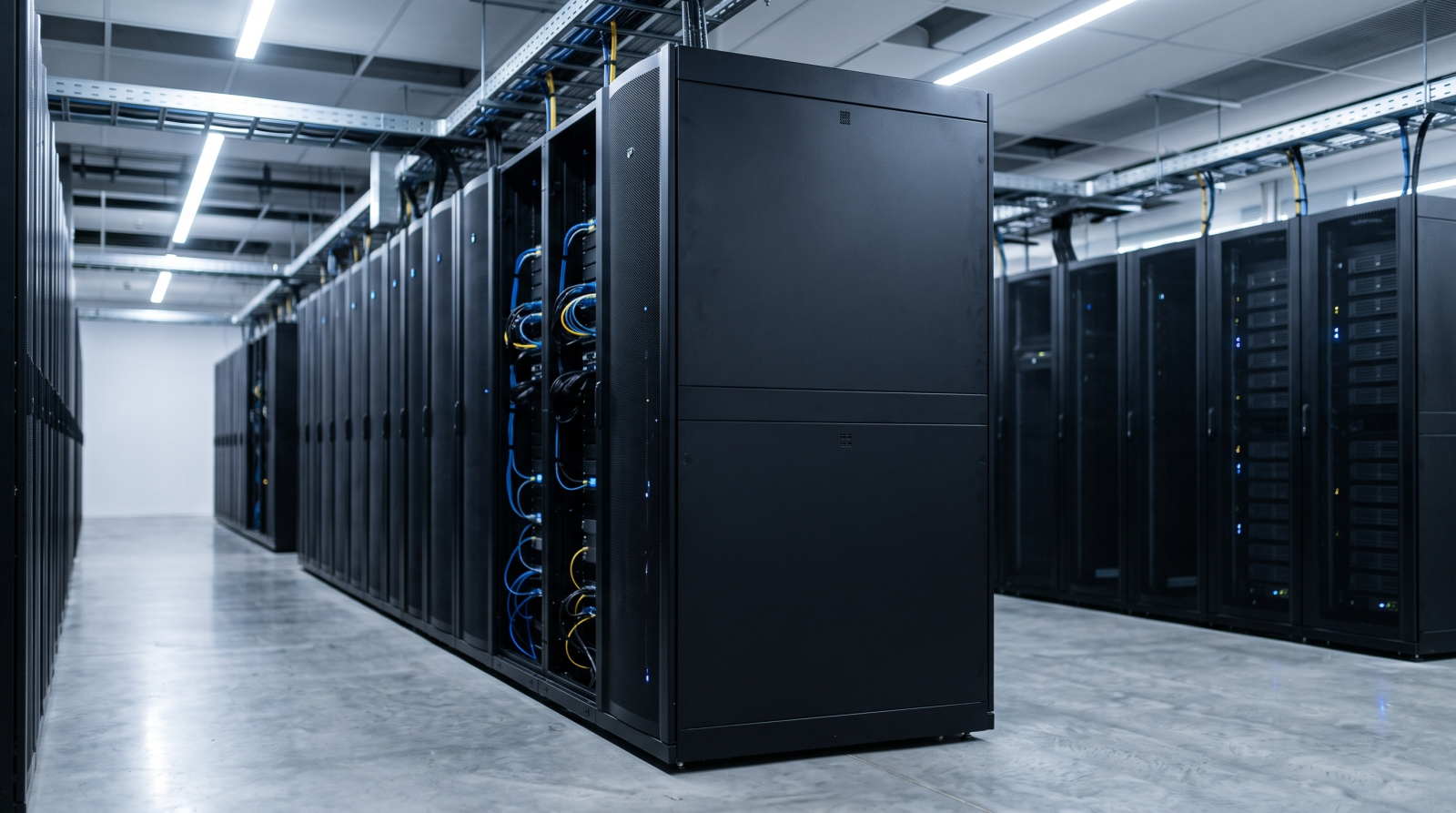
The US data center market now measures about 31 to 32 gigawatts, and one megawatt of power runs somewhere between 750 and 1,000 homes for a year. Put those two numbers together and the scale of what has been built, and what is still being built, comes into focus. Data centers have moved from a specialty most brokers never touched to one of the most talked-about property types in commercial real estate, and the conversation now runs from cap rates to zoning fights to what the whole build-out does to jobs.
To sort the signal from the noise, I welcomed Ermengarde Jabir, PhD, Director of Economic Research at Moody’s Analytics, back to America’s Commercial Real Estate Show. We covered what these buildings cost, what they trade at, who is building them, and the harder question underneath the boom: what happens when exponential growth, as it always does, stops being exponential.
For owners, investors, and developers, the takeaways are practical. This is a sector with real tailwinds and real traps, and the difference between the two often comes down to details like floor loading and the risk premium.
The Right Yardstick: Power, Not Square Footage
The instinct in commercial real estate is to size a market by square feet. With data centers, that instinct misleads. Ermengarde’s point is that the amount of power supplied is what matters, and the reason is a fast-moving form of obsolescence that most property types never face.
Because the technology inside these buildings is evolving so quickly, a newer facility can pull the same amount of power while needing far less interior space. A 50,000 square foot data center built 10, 15, or 20 years ago might now need only 25,000 square feet to host current racks and servers, which can leave roughly half of an older building sitting empty. That is a different kind of risk than vacancy in an office tower, and it is central to how these assets should be underwritten.
The label also covers more than one thing. Co-location is the traditional type, essentially a data center mall with many tenants sharing space. Beyond it sit carrier hotels, cloud, enterprise, edge, and managed services, and then the type driving the headlines: hyperscale, the large facilities built to support the expansion of AI.
Who Is Building, and Why the Shell Is the Easy Part
The developer pool is wide. Traditional commercial real estate developers have moved into data center construction because the pipeline from office, retail, and multifamily has thinned, and this is where the work is. Alongside them are the owner-operators, the largest tech companies building their own data centers because they are effectively the sole tenants and need the capacity for their cloud and AI services. And then there are the first movers who have been in this for decades, including Digital Realty and Equinix, long two of the largest REITs in the world.
Hyperscale is the type being built most, and physically it resembles an industrial property. The shell is a large, sometimes multistory box, closer to warehouse distribution than to anything exotic. The cost lives in the interior build-out: state-of-the-art chips, racks, servers, and cooling. Cooling itself is shifting. Air-based systems, which rely on water, are giving way to liquid coolant designs using chemical coolants, with many newer facilities running fully liquid or a hybrid of air and liquid. Because the tech companies want everything integrated in-house, more of these expensive hyperscale projects are being built and owned by the users themselves.
The Pricing Picture: Competitive Cap Rates and a Shrinking Risk Premium
On pricing, data centers screen well against the traditional core sectors. Ermengarde put cap rates in the 4% to mid-5% range, closer to the multifamily universe than to industrial, which generally sits in the 6% range. Lower cap rates are good for values, but they come with a caveat worth taking seriously.
The 10-year Treasury has pushed up recently, past 4% and 4.5% toward 4.6% and 4.7%, which compresses the risk premium. Commercial real estate is a wonderful asset class, but it is not risk free, and when a cap rate sits very close to the risk-free rate, there is not much room for error left in the price. For anyone underwriting a data center acquisition, that gap between the going-in yield and the Treasury is the number to watch.
Adaptive Reuse: The Load-Bearing Floor Test
With obsolete office and dead regional malls scattered across the country, conversion to data centers comes up often, and it is more feasible than an office-to-apartment conversion in one respect: you are not plumbing in kitchens and bathrooms or chasing light requirements. The shell can largely stay as it is and get retrofitted.
- The One Test That Decides It: Whether the floors are load bearing. Office floors need a structural load capacity in the neighborhood of 150 to 300 pounds per square foot to carry data center racks and servers, depending on the build. If the floors carry the load, it can be a great conversion. If they do not, the math does not pencil and the structure cannot be converted as is.
- The Local Math That Drives Approvals: Obsolete suburban office, Class B and C space, and dead regional malls have depleted local tax bases, so many municipalities are amenable to approving data centers to recover that revenue, often with no impact on schools. Where communities once offered tax incentives to attract them, surging demand has flipped the dynamic: developers now apply to municipalities, and the incentives are increasingly unnecessary. That said, the opposition is real, and moratoriums are spreading across states.
The Bigger Question: Jobs, AI, and the Real Economic Impact
The economic story is not as simple as the construction cranes suggest. The employment boost from a data center is concentrated in the construction phase. Once a facility is running, it is serviced by small, highly specialized technical teams that often live far away and are flown in, so permanent local job creation is thin. A small facility running 24-hour security might support three people. The real job creation tied to data centers is the AI innovation they enable, and that work can happen anywhere: an office in San Francisco supported by a data center in Washington state. The benefit is macro, not local.
On the broader employment picture, Ermengarde is measured. The headline unemployment rate near 4.1% looks like full employment against the Congressional Budget Office estimate around 4.4%, but low workforce participation complicates the read, including workers who doubt they can adjust to AI, alongside a large wave of baby boomers heading into retirement. I see the front edge of this in our own client base, where some companies have already trimmed roles as AI takes over specific tasks. Ermengarde also framed the decline in office-using employment since its early-2020s peak not as a permanent break but as another market cycle, comparable to the dot-com adjustment, where the workforce reshapes around a new technology.
Final Thoughts: Different Jobs, Not Fewer
Ermengarde’s throughline is a useful corrective to both the hype and the doom. Exponential growth is not sustainable in the long run, and while she expects strong data center activity for roughly the next four to five years, through the end of the decade, the sector will eventually move from boom into a more measured phase as businesses work out how to actually implement AI, and at what cost. The technology is here to stay, and like the industrial revolutions before it, from the steam engine to the cotton gin, it will make work more efficient without removing the need for people.
Her answer on jobs is the line worth remembering. It is not more jobs or fewer jobs for the foreseeable future. It is different jobs, with some roles automated away and new skills required to work alongside the technology. For commercial real estate, the parallel is direct: the winners will be the ones who underwrite the obsolescence honestly, respect the shrinking risk premium, and treat data centers as the specialized, fast-changing asset class they are.
Optimize Your Commercial Real Estate Positioning
Every market cycle creates challenges and opportunities. Business owners who plan early, investors who stay disciplined, lenders who lean in thoughtfully, and agents who continuously improve will be best positioned to succeed in the year ahead and beyond. If you’d like to discuss any of these strategies in more detail, feel free to reach out.
Whether you are evaluating a data center acquisition against the risk premium, weighing a conversion of an obsolete office or retail asset, or repositioning space in a shifting market, Bull Realty provides the specialized market intelligence needed to execute clean transactions. Contact our Investment Advisory team today to discuss how data center demand and the current rate environment affect the value of your specific asset.
Michael Bull, CCIM
Michael@BullRealty.com
404-876-1640 x 101
https://www.bullrealty.com